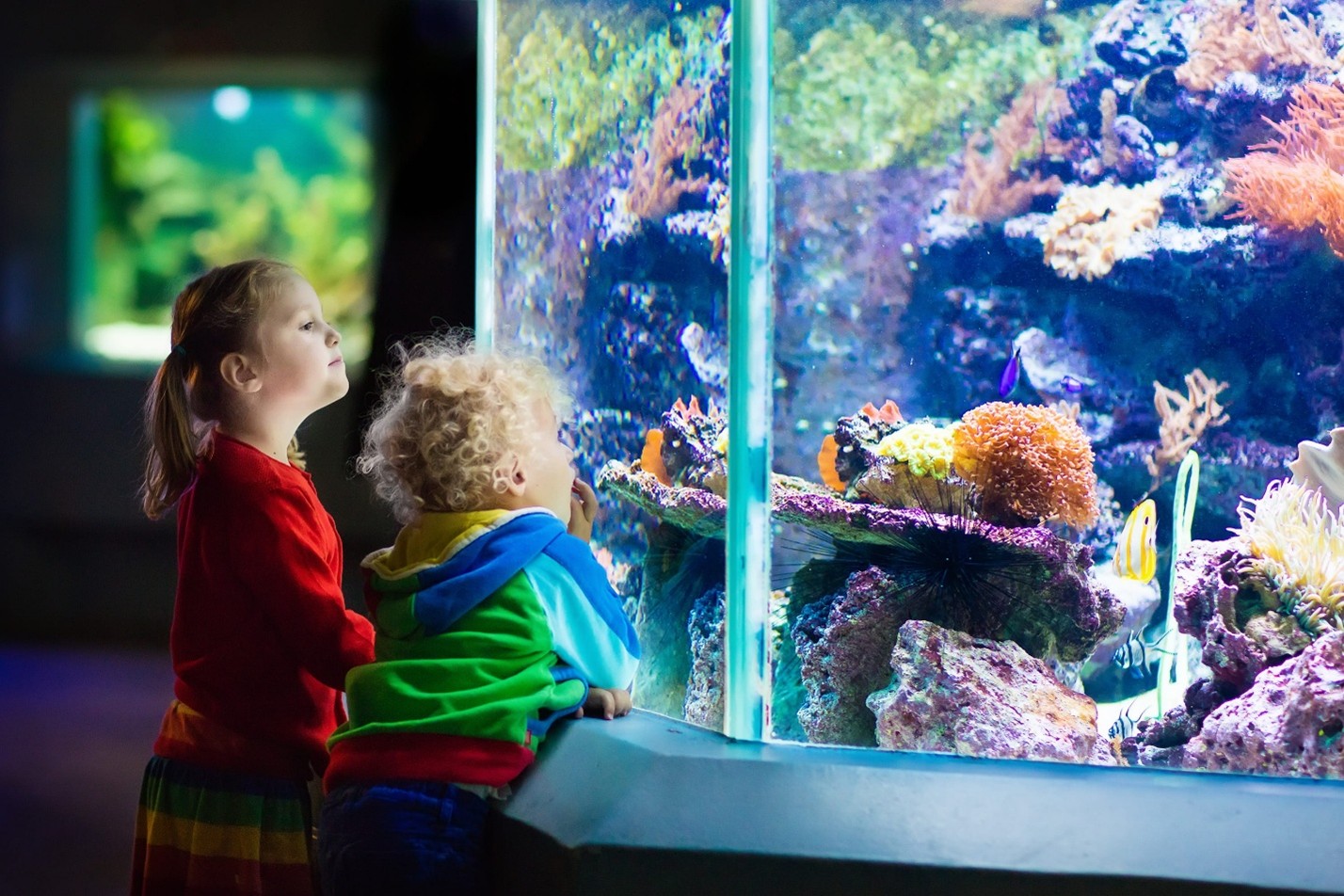
STEM education, science, technology, engineering, and mathematics, thrives when students can move beyond theory and interact directly with the concepts they are learning. While textbooks and digital simulations provide foundational knowledge, Ryan Kellogg of Ohio shares that hands-on experiences often create deeper understanding and long-term retention. One of the most dynamic and engaging tools for STEM learning is also one of the most visually captivating: the aquarium.
Aquariums function as living laboratories. Within the glass walls of a tank exists a complete ecosystem governed by biological, chemical, and ecological principles. Whether in a classroom, educational facility, or community learning space, aquariums offer students a tangible way to observe, measure, and analyze scientific processes in real time.
Biology in Action
At its core, an aquarium is a biological system. Fish, plants, invertebrates, and microorganisms interact in complex and interdependent ways. This makes aquariums powerful tools for teaching biological concepts at multiple levels. Students can study anatomy and physiology by observing fish respiration through gill movement or examining how body shapes relate to swimming patterns. Behavioral biology comes to life when learners observe schooling behavior, territorial dynamics, feeding habits, and reproduction.
Aquariums also introduce students to microbiology. Beneficial bacteria play a critical role in biological filtration, converting toxic ammonia into less harmful compounds. Although these bacteria are invisible to the naked eye, their presence can be measured through water testing. This connection between unseen organisms and measurable outcomes reinforces the concept that life exists at microscopic levels with significant ecological impact.
Plant life in aquariums further expands biological lessons. Students can explore photosynthesis, nutrient uptake, and plant growth cycles. Observing how lighting conditions affect plant development introduces important biological and environmental variables. By maintaining and observing an aquarium, students see biology not as isolated facts but as an interconnected, dynamic system.
Chemistry Made Tangible
For many students, chemistry can feel abstract. Aquariums transform chemical principles into visible cause-and-effect relationships. Water chemistry directly impacts the health of aquatic organisms, making chemical balance both measurable and meaningful. The nitrogen cycle is one of the most important chemical processes in an aquarium. Fish produce waste that releases ammonia—a toxic compound. Beneficial bacteria convert ammonia into nitrite and then into nitrate, which is less harmful and can be removed through water changes or absorbed by plants. This ongoing cycle demonstrates chemical transformation in action.
Students can test water parameters such as pH, ammonia, nitrite, nitrate, hardness, and alkalinity. These measurements connect directly to chemical concepts like acidity, molecular conversion, and concentration levels. For example, changes in pH can affect fish stress levels and plant growth. Elevated ammonia levels may indicate insufficient biological filtration. By testing, recording, and interpreting data, students engage in applied chemistry rather than theoretical memorization. Aquariums also introduce discussions about dissolved oxygen levels, salinity in marine systems, and mineral content. Each parameter reinforces chemical principles while emphasizing real-world application.
Ecology and Interdependence
Aquariums are microcosms of natural ecosystems. They demonstrate ecological relationships such as predator-prey dynamics, competition for resources, symbiosis, and nutrient cycling. Students can observe how overfeeding increases waste production, which affects water quality and plant growth. They can see how adding too many fish disrupts balance. These experiences illustrate carrying capacity and population management in a controlled environment.
The concept of interdependence becomes clear when students recognize that each component of the aquarium, fish, plants, bacteria, and filtration systems, relies on the others. Remove or destabilize one element, and the entire system is affected.
This ecological awareness naturally extends to broader environmental science discussions. If a small tank can become imbalanced due to pollution or overcrowding, what happens in rivers, lakes, and oceans when similar pressures occur? Aquariums provide a scaled-down example of global environmental challenges.
Environmental Science and Conservation Awareness
Aquariums can serve as gateways to environmental stewardship. Through studying aquatic ecosystems, students gain insight into water conservation, habitat preservation, and biodiversity. Discussions about freshwater ecosystems can lead to exploration of local rivers and lakes. Marine tanks can introduce coral reef ecosystems and the impact of climate change, ocean acidification, and pollution.
Students may also learn about responsible livestock sourcing and the importance of avoiding invasive species. Understanding how delicate aquatic systems can be encourages a conservation mindset. By caring for a living ecosystem, students develop respect for natural processes and recognize the importance of sustainable environmental practices.
Engineering and Systems Thinking
Beyond biology and chemistry, aquariums incorporate engineering principles. Filtration systems, pumps, lighting configurations, and heating mechanisms require design and maintenance. Students can explore how water flows through mechanical and biological filters, how lighting affects plant growth, and how system design impacts stability.
Designing an aquarium setup requires problem-solving and systems thinking. How large should the tank be to support certain species? How much filtration capacity is needed? What type of lighting promotes optimal plant health?
These questions encourage students to think like engineers. They must consider variables, constraints, and long-term outcomes. Troubleshooting issues, such as algae blooms or equipment malfunctions, further reinforces analytical thinking.
Mathematics and Data Analysis
Mathematics is embedded throughout aquarium care. Students calculate tank volume, determine water change percentages, measure chemical dosages, and track growth rates. They can graph water parameter trends over time and analyze patterns.
For example, plotting nitrate levels across several weeks may reveal how feeding frequency affects water quality. Calculating the ratio of fish biomass to tank capacity introduces proportional reasoning.
By integrating data collection and analysis into aquarium maintenance, educators transform math from abstract equations into meaningful problem-solving tools.
Encouraging Inquiry-Based Learning
Aquariums naturally inspire curiosity. Why are certain fish more active at specific times? Why do algae grow more quickly under brighter lighting? What happens if water temperature fluctuates?
These questions promote inquiry-based learning. Students can form hypotheses, design small experiments, and observe outcomes. For instance, adjusting lighting duration in a planted tank can demonstrate how variables affect plant growth.
Inquiry-based learning fosters critical thinking and scientific reasoning. Rather than passively receiving information, students actively explore cause-and-effect relationships.
Building Responsibility Alongside Knowledge
In addition to academic benefits, aquariums teach responsibility. Maintaining a healthy tank requires routine testing, feeding, cleaning, and observation. Students learn that neglect leads to measurable consequences, while consistent care supports thriving life.
This combination of responsibility and scientific engagement strengthens both cognitive and character development.
A Living Laboratory for STEM Education
Aquariums uniquely integrate multiple STEM disciplines into a single, interactive platform. Biology, chemistry, ecology, environmental science, engineering, and mathematics converge within one contained ecosystem. Unlike static demonstrations, aquariums evolve daily. Fish grow, plants spread, water chemistry shifts. This constant change keeps learning dynamic and relevant.
For educators seeking meaningful ways to engage students, aquariums offer more than decoration; they provide immersive, hands-on STEM experiences. By observing, testing, analyzing, and maintaining living ecosystems, students gain not only knowledge but also a deeper appreciation for the scientific principles that govern the natural world.
In an era where experiential learning is increasingly valued, aquariums stand out as powerful educational tools, quietly teaching complex concepts through the steady rhythm of life beneath the water’s surface.